Skip to content

About FinEdge

Life is not lived in an Excel sheet. Investing is not just about numbers.

Numbers matter. They help us understand what is possible. But some of the most important decisions people make about money are ultimately decisions about their lives.

FinEdge was founded in 2011 on a belief that went beyond investing: specialise deeply, understand the problem, add genuine value and do what you believe is right for the person.

We did not begin with a target for products sold, assets managed, revenue earned or the size FinEdge should become. We believed that if we did useful work well enough, a sustainable business should follow.

The commercial outcome was meant to follow the work — not determine what the right work was.

The idea began before FinEdge

The seed had been sown years before the company was founded.

Around 2005–06, while working inside banks, Harsh Gahlaut saw an industry concentrating much of its attention on people whose wealth had already been created. Private banking and wealth-management businesses competed intensely for affluent clients.

But a much larger group of people was still creating wealth — building careers, supporting families and making financial decisions that could shape the next several decades of their lives.

Products were relatively easy to sell when fear, greed or market excitement created urgency. Building a serious investing relationship that helped people make better decisions over time was harder.

By 2011, that question had become FinEdge.

The question that stayed with him

Could you build a serious, scalable investing model for people while their wealth was still being created — not only after they had already become wealthy?

Why was FinEdge founded?

FinEdge was founded to build a serious investing relationship for people while they were still creating wealth — combining human understanding, investing depth and a process designed around real financial decisions rather than product transactions.

Do what you believe is right. Let the outcome follow.

That idea shaped something broader than an investment proposition.

Sometimes doing what we believe is right will also be good for FinEdge commercially. Sometimes it may not be. The responsibility is to keep the order clear.

Understand the problem first. Decide what is right. Let the commercial outcome follow.

What a business must sustain

A business has to be commercially sustainable. It has to earn, invest, employ people and continue improving if it is going to keep serving investors well.

What must not determine the investor answer

Commercial convenience cannot become the test for what is right for an investor. The expected revenue from a decision should not be the reason that decision becomes the answer.

Beliefs become real when they shape difficult choices.

The ideas behind FinEdge did not arrive as a finished system in 2011. They were tested and refined through choices — particularly when a commercially easier path was available.

Choice A

Serve people while they are still creating wealth

FinEdge was built for people in the wealth-creation phase of life, not only for those who had already accumulated substantial wealth.

That meant building a model capable of combining scale with continuing human involvement — because the people making important financial decisions often need structure most while their lives, goals and wealth are still evolving.

Expertise should add value during the journey, not become available only after the journey has already created wealth.

Choice B

We said no to an easier commercial path

In FinEdge’s early years, there was strong internal and external pressure to add insurance to the product mix. It was common across the industry and commercially attractive for a young financial business.

We chose not to build FinEdge around that opportunity because it did not fit the investing problem we were trying to solve.

This is not a judgement on whether insurance has a role in someone’s financial life. It is about something more basic.

The commercial attractiveness of a product could not be the reason it belonged in the FinEdge model.

Choice C

We chose depth before scale

FinEdge has remained bootstrapped by choice.

External capital could have helped us acquire customers and scale much faster, particularly in the early years. But faster growth could also have meant asking the organisation to scale before we had given ourselves enough time to understand the problem deeply and build the processes, investing capabilities and technology needed to solve it well.

We chose to build more patiently.

Growth mattered. But we did not want growth to outrun our ability to create value.

Choice D

Do not let a target decide the conversation

FinEdge Investment Managers do not carry product, sales or revenue targets.

That does not make FinEdge free of commercial interests. We earn when investors invest through the Regular Plans of Mutual Funds and SIFs we distribute.

But we did not want an Investment Manager’s individual target to become another force pushing an investor conversation towards a transaction.

The investor's situation should shape the next step — not a salesperson's target.

Choice E

Sometimes the right answer is not a new investment

A serious investing process should be capable of reaching more than one commercially convenient conclusion.

Depending on the investor’s situation, the right next step may be to invest, continue what is already working, wait, or deal with another financial priority first.

That principle matters because solving the person’s actual problem is more important than turning every interaction into a transaction.

Choice F

The method should shape the technology

As FinEdge evolved, off-the-shelf systems were not always sufficient for the kind of context, process discipline and continuity the model required.

So we increasingly built proprietary technology around the investing approach rather than redesigning the investing approach around the limitations of available software.

That choice eventually contributed to Dreams Into Action, the Bionic Model and the AI-enabled decision-support architecture FinEdge is continuing to build.

Technology became more sophisticated. The original question did not change: what helps us understand the investor better and support a better contextual decision?

The conviction existed first. The systems came later.

We did not start FinEdge in 2011 with today’s methodology, technology or AI architecture already mapped out.

The original conviction came first. The answers evolved as we learned what it actually took to solve the problem at greater depth and scale.

The technology has changed enormously. The underlying question has not: what will help us understand the investor better and support a better contextual decision?

  1. Founding belief

    Understand the person. Solve the real problem. Do what you believe is right.

  2. Investing philosophy

    Goals, context, suitability, discipline and judgement before products.

  3. Dreams Into Action

    A repeatable methodology for turning meaningful aspirations into continuing action.

  4. Operating discipline

    Dedicated Investment Managers, structured decisions, implementation, review and continuity.

  5. Proprietary technology

    Systems built around the method and the context the relationship needs to preserve.

  6. The Bionic Model

    Human judgement strengthened by process, technology and institutional intelligence.

  7. AI + ODE

    A decision-intelligence architecture increasingly connecting context, institutional knowledge and AI-supported preparation around accountable human judgement.

Two founders. Different strengths. One institution.

Harsh Gahlaut and Mayank Bhatnagar had known each other since school, long before they became co-founders of FinEdge in 2011.

Their professional journeys developed differently — and those differences became useful when the two began building something together.

FinEdge has been shaped by complementary forms of judgement: investment and strategic conviction alongside patience, operating discipline and institution-building.

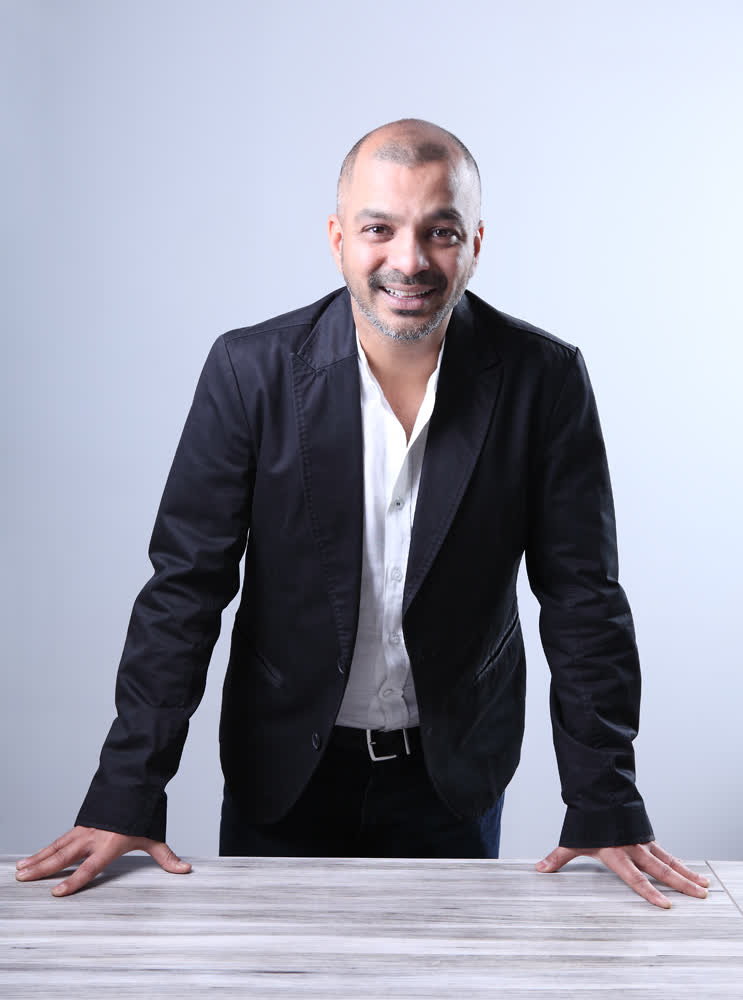
Harsh Gahlaut, Co-Founder and Chief Executive Officer of FinEdge

Harsh Gahlaut

Co-Founder and Chief Executive Officer

Harsh’s professional experience before FinEdge exposed him closely to investing, capital markets, private banking and the client side of wealth management. He held leadership responsibilities at Standard Chartered Bank and was part of the founding teams at Dawnay Day AV Private Banking and Religare Macquarie Private Banking.

The questions that eventually led to FinEdge began taking shape during those years. Within FinEdge, much of his focus has remained on investment thinking, institutional philosophy, the investor proposition and the next strategic problem the organisation needs to solve.

He holds an MBA from Symbiosis Institute of Management Studies and a BCom (Honours) degree from Hansraj College, University of Delhi.

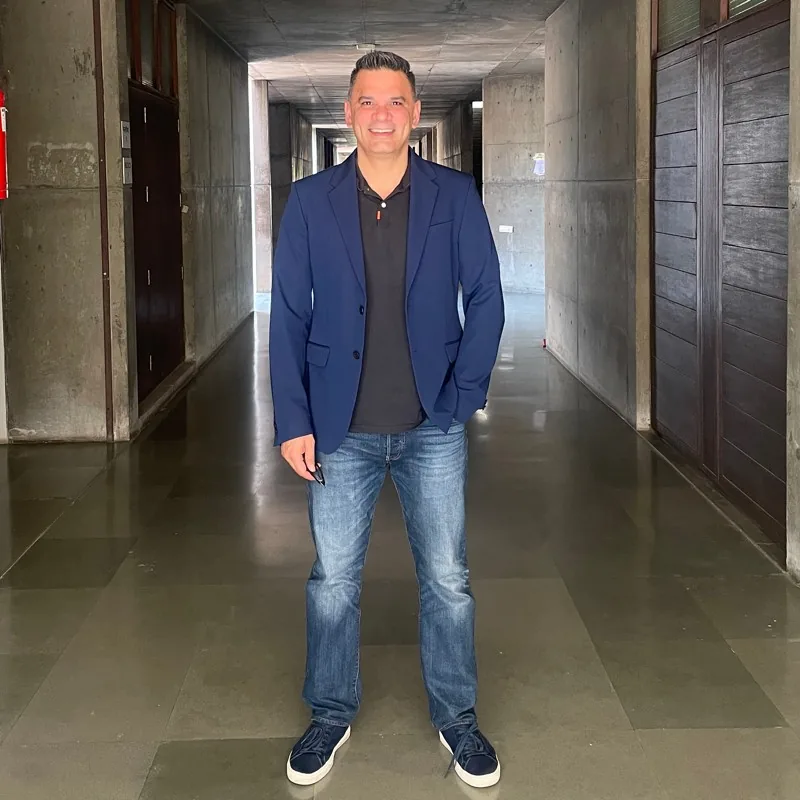
Mayank Bhatnagar, Co-Founder and Chief Operating Officer of FinEdge

Mayank Bhatnagar

Co-Founder and Chief Operating Officer

Mayank brings more than 25 years of banking and operating experience, including more than eight years at Standard Chartered Bank across its Mortgage Banking and Corporate Banking businesses, where he helped build a ₹1,000 crore mortgage portfolio and later managed some of the bank’s largest corporate relationships.

His role in building FinEdge has brought operating discipline, organisational strength and the ability to turn ideas into processes and systems that can endure as the institution grows. Mayank is a Post Graduate in Business Management.

What those choices have built

FinEdge did not begin with a target for scale.

But over time, the original idea has been tested through thousands of real investor relationships.

These numbers are not the reason FinEdge exists. They are evidence of what has been built around the idea.

See Investor Journeys

Founded
2011
Clients
21,000+
Assets under management
₹1,600+ crore
Publicly visible Google reviews · rating
2,000+ · 4.7

The Compounding of Good Decisions

In investing, compounding is usually discussed in terms of returns.

We think there is another kind that comes first.

Every investing journey is shaped by decisions — when to begin, how much to invest, what risk to take, when to remain patient, when something genuinely needs to change and what to do when life itself changes.

No single good decision guarantees a good outcome.

But good decisions made repeatedly — informed by context, improved through experience and carried forward with discipline — can compound too.

That is the kind of compounding we have tried to build FinEdge around from the beginning.

The systems have evolved. The technology has evolved. FinEdge itself has evolved.

The responsibility has not: keep trying to understand the problem deeply, make the best decision we can with the context we have, and do what we believe is right.