
Looking for a Financial Advisor in India?
Yes — wherever you live. FinEdge is an AI-enabled, expert-led investing platform built for better decisions, and the way FinEdge works with you does not change with your pin code. You get a dedicated Investment Manager who knows your goals, your cash flows and what you already hold, and the relationship runs digitally end to end.
FinEdge is an AMFI-registered Mutual Fund & SIF Distributor — ARN 83676. You can verify our AMFI registration.
- 21,000+
- investors working with FinEdge
- 1,800+
- cities and towns they live in
Where you live is not the part that varies
Distance is not what weakens an investing relationship — losing the thread is. What changes from one investor to the next is not the city. It is the person.
The same, wherever you live
One dedicated Investment Manager who maps your goals, structures the decision and explains the trade-offs before anything is executed. The same FinEdge investing process. The same access and responsiveness. Mutual fund and SIF decisions executed digitally, documentation included. Reviews at regular intervals rather than when markets make the news. And the relevant context behind your earlier decisions, present in the next conversation.
Different for every investor
Your goals and the dates attached to them. Who else in the household is deciding. How your income actually arrives. What you already hold, and what you owe. How close retirement is. What you have done in previous falls, and what you would rather not repeat. That is the part a good investing decision has to start from — and it is why the city guides below are not the same page with a name changed.
FinEdge is headquartered in Gurugram and there is no branch to visit. The relationship does not depend on you living nearby: conversations, documentation, transactions and reviews are all completed online, at a time that suits you.
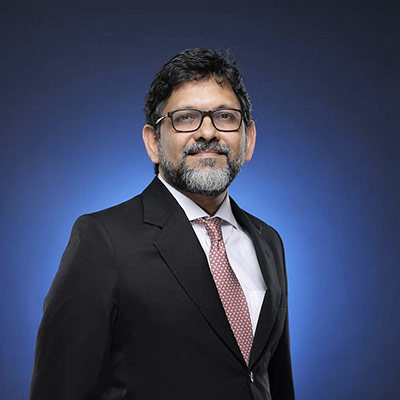
“FinEdge, our partner for more than a decade, has built a very customer centric tech platform that enables them to reach lacs of Indian investors, with no barriers of geography.”
“Being digital is easy, building trust in digital is not.”
Different places, the same things being described
These are public Google reviews, in the clients’ own words, from places with very little in common. Read them together and the recurring details are not about location: being explained things, being able to reach someone, the portfolio being reviewed, and relationships counted in years.
“Im writing this after 5 years of association with FinEdge - i could least say, " heartful thank you enough to all the advisors for helping me out including current (Archana), to establish a strong portfolio". Appreciate all the support and patience. On top of everything, the knowledge and suggestions you bring in are just stupendous.”
“Been associated with FinEdge for more than 10 years and have had a very nice experience working with Deepika Bharati who has been my relationship manager for some 6 years now. We have frequent interactions and discussions about my financial portfolio and need for changes to adapt to the market conditions and my changes in goals and it's priorities. She is very professional and shown a lot of patience and care to answer all my queries and doubts and convince me to take the decisions needed to get good returns.”
“Investment with FinEdges makes my future secure and also guided me, how to increase wealth by taking patience during volatility of market. From himanshi to Ambre, all my advisor provide/makes my portfolio strong whenever I was busy they managed and satisfied me very greatfully. Thanks”
“I’ve been investing through FinEdge for the past two years, and my experience has been excellent. Ayushi has been managing my portfolio throughout this period, and she’s been incredibly supportive and professional. She regularly reviews and rebalances my portfolio based on my goals and market conditions, and she’s always proactive in explaining the reasoning behind her recommendations. What I appreciate most is her patience, politeness, and willingness to answer all my questions without making the process feel overwhelming.”
“I have been investing through Finedge from the past 15 years and the relationship managers are doing a great job managing the portfolio. My present Manager is Kritika Kohli and Diya Patwal who have been there for a very long time and manages the portfolio really professional way with timely intervention. She also listens and explains very patiently about why we are doing something. Thank you Kritika and Diya and Finedge for providing a wonderful experience and also manage the investments in the best possible”
“I have been investing through them since 2009. I never feel that I am talking to an investment advisor rather I feel talking to a friend I trust. They are great professionally, yet they talk to you as a friend. I even have kept in touch with their earlier advisors. I think what is different about Finedge is their approach to handling their clients. I have seen so many recessions during the period, while I got anxious, they kept cool and talking to them, I calmed down while my investments grew. That matters a lot.”
6 reviews from 6 places is a small window on a much larger public record. Google Reviews from Clients looks at what clients across that record keep coming back to — including what changes over long relationships, and what they say when an Investment Manager changes.
If things change, you should not have to start again
Over a long investing relationship, things move. You may change city or job, or find that what you are investing for is not what it was five years ago. Your Investment Manager may change too — that happens, and trust with a new person still has to be built. Nobody can promise you the same individual forever.
What should not disappear is everything around the investing: your goals, what you hold, the decisions taken earlier and the reasons they were taken, past reviews and anything still open. That context is held institutionally rather than in one person’s memory, so a new Investment Manager does not begin at zero and you are not asked to reconstruct years of history. How the Bionic Model works explains the human, AI and technology combination behind that.
The IIM Calcutta Case Research Centre documented this operating model in FinEdge: Bionic Advisory for a Digital India, if you would like to examine it independently — read the case study.
Start from what you’re dealing with
The city guides are grouped by the decision investors actually arrive with. Find the one that sounds like your situation — the guide will be closer to your question than the name of the city suggests.
Seeing what you actually hold
“I'm not sure what I actually own, or whether it adds up to anything.”
These guides start by putting everything in one picture before any decision is taken.
and 2 more, in the full list below.
Is what I'm doing enough
“I've been investing steadily — but is it actually working towards anything?”
Here the investing is already regular. What is missing is a check against a real goal.
Ordering goals when you cannot fund everything
“Several things matter, and the money doesn't stretch to all of them.”
These guides deal with more than one dated goal drawing on the same monthly surplus.
and 2 more, in the full list below.
Wealth you own but cannot use
“We have assets — we just can't reach the money when we need it.”
The subject here is the gap between what a household is worth and what it can actually use.
Investing on the income you actually have
“My income isn't a smooth monthly number.”
These guides start from how much you can genuinely invest, and when.
and 1 more, in the full list below.
Retirement, in stages
“Retirement is close enough that it needs planning properly.”
Three different distances from the same event, each needing a different conversation.
Deciding as a household
“We need to decide this together, and we don't agree yet.”
More than one person is deciding, and they are not always in the same place.
When something is about to change
“Something has changed, or I'm considering a change.”
These guides are about the moment just before you act on it.
Working out who you would actually be dealing with
“Before I commit — what is this person responsible for, and how will they work with me over time?”
These guides answer what the arrangement involves, and what the Investment Manager is and is not accountable for, before any investing decision.
and 3 more, in the full list below.
Or find your city
All 41 investor guides, A to Z. Read any of them — the way FinEdge works is the same in all of them; the decision each one starts from is not.
- Agra
- Ahmedabad
- Ambala
- Amravati
- Ayodhya
- Bangalore
- Bhopal
- Bhubaneswar
- Chandigarh
- Chennai
- Coimbatore
- Dehradun
- Delhi
- Goa
- Gurugram
- Guwahati
- Gwalior
- Hyderabad
- Indore
- Jabalpur
- Jaipur
- Jammu
- Jamshedpur
- Kanpur
- Kochi
- Kolkata
- Lucknow
- Meerut
- Mumbai
- Mysore
- Nashik
- Noida
- Patna
- Prayagraj
- Pune
- Ranchi
- Thiruvananthapuram
- Tiruppur
- Udaipur
- Varanasi
- Visakhapatnam
Don’t see your city?
These 41 are guides FinEdge has written, not the places FinEdge works in. Clients live in 1,800+ cities and towns across India, and nothing about the relationship needs a FinEdge office in yours. If your city is not on the list, that changes nothing about how we would work with you.
So what are you actually trying to decide?
Where you live is settled. If you already know what you are trying to work out, go straight there.
- Investing towards a specific goal — when there is a date and an amount, and you want the plan built backwards from it.
- A review of what you already hold — when the investing has happened, but nobody has checked whether it adds up to anything.
- Investing in India from abroad — FinEdge clients live in 90 countries, and investing from outside India raises its own questions about accounts, repatriation and tax.
A first conversation is a discussion of your goals, what you already hold and what you are trying to decide — not a product recommendation. FinEdge earns distributor commissions from asset management companies, and Investment Managers are not given sales targets: how FinEdge makes money. FinEdge was also named WealthTech of the Year (Gold) at the BW Festival of FinTech 2026, among other awards and recognition.