Investing Insights

Understanding the Difference Between Multicap and Flexicap Funds
When it comes to equity mutual funds, investors often come across a variety of fund categories tailored to meet different investment objectives. Two categories that frequently cause confusion are Multicap Funds and Flexicap Funds. While both invest across market capitalizations (large-cap, mid-cap, and small-cap stocks), they differ significantly in their investment approach and mandates. Understanding these differences is crucial for making informed investment decisions.

How to Invest in Mutual Funds: Tips for Building a Balanced Portfolio
Mutual funds are one of the most versatile financial products to help you achieve your financial goals. They can help you diversify across various asset classes, such as domestic and international equities, fixed income, gold, etc. Some of them, like hybrid and multi-asset funds can help to build a diversified portfolio by investing in multiple asset classes through a single scheme. They allow you to make lumpsum and regular investments through SIP. Thus, mutual funds can cater to different investors with different schemes based on their requirements. In this article, we will understand how to invest in mutual funds and how to build a balanced portfolio through them.

ETF vs Actively Managed Mutual Funds: Key Differences Every Investor Should Know
When investing in mutual funds, investors can choose from schemes that can give market returns (benchmark index) or have the potential to outperform the market. Passive schemes, including index funds and exchange-traded funds (ETFs), provide returns that mirror the benchmark. Active schemes have the potential to outperform the benchmark. Many investors wonder whether to choose ETF or mutual fund. In this article, we will understand what are mutual funds and ETFs, their differences, and which is better: ETF or mutual fund.
How are Mutual Fund Returns Calculated?
We invest in financial products to achieve our financial goals. Based on factors like how much we want to invest, for how long, and the target amount, it is the expected returns that help us understand whether we can achieve our goal. The returns can be measured using different ways like absolute returns, compounded annual growth rate (CAGR), etc. In this article, we will understand what is absolute return, CAGR, how they are calculated, and which one you should use.
A Comparison of Small Cap, Mid Cap and Large Cap Funds
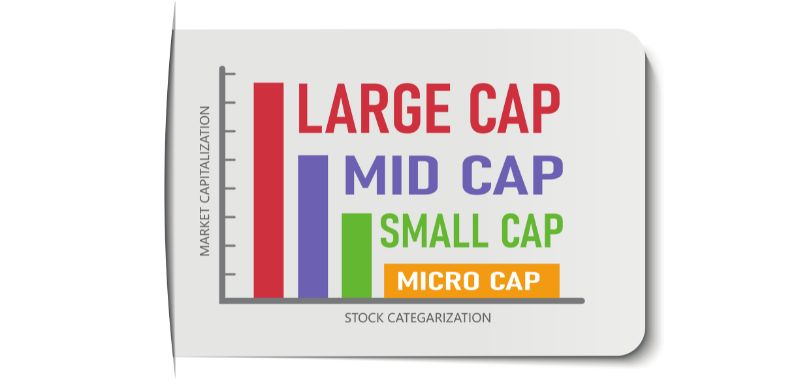
The equity mutual fund investing universe is quite vast. Many types of equity mutual funds exist based on the size or market capitalisation of the companies they invest in. These include large, mid, and small cap mutual fund schemes. In this article, we will understand what are large, mid, and small cap funds, their differences, and what you should consider before investing in them.

What Is STP in Mutual Funds and Its Types
Have you recently received a lump sum as an annual bonus from the employer, maturity proceeds of a financial product, or won prize money from some competition/lucky draw? You must be wondering how to invest this money in a staggered manner while not worrying about impulsive spending. A systematic transfer plan (STP) can help you do that. In this article, we will understand what is STP in mutual fund, its benefits, how to do it, and things to consider before doing an STP.

Active and Passive Funds: How They Can Complement Your Portfolio
In the last few years, passive funds have become quite popular among investors. Some reasons for this include the number of passive funds launched by AMCs, wider awareness about them, their performance and benefits, etc.

Should You Invest in International Equity Funds? Understanding Returns, Risks and Allocation
International equity funds offer access to global markets, but their role in a portfolio requires careful consideration. Understanding risks, returns, and allocation can help investors use them more effectively.

What is three common Mutual Fund myths?
As the Mutual Fund industry continues to grow with overall assets touching the Rs. 39 Lakh Crore mark, here are a few commonly held myths that any good mutual fund investment planner will ask you watch out for before you invest.

Mutual Funds vs Stocks: Which Investment Is Right for You?
An individual can invest in equities through two primary modes: Direct equity and equity mutual funds. Both options have their pros and cons. Many investors often ask, mutual fund vs stock: Which is better? In this article, we will understand these investment options, the pros and cons of each, the difference between stocks and mutual funds, and which is better to invest in.

Mutual Fund Taxation in India: Understanding LTCG and STCG in 2026
Mutual fund taxation depends on the type of fund and the duration of your investment. A clear understanding of these rules can help you manage post-tax returns more effectively.
Latest Posts
Jun 16, 2026
Why Long-Term SIP Investing Works Better When It Is Linked to Real Goals
Jun 11, 2026
5 Investing Traps That Can Quietly Derail Long-Term Wealth Creation
Jun 09, 2026
How Much Should Your SIP Be to Build a ₹10 Crore Retirement Corpus?
Jun 08, 2026
Financial Planning Gaps Families Often Discover Too Late
Jun 05, 2026
The Importance of your Child’s Education Goal
Feb 28, 2024

Why Retirement Planning is Important
Nov 08, 2023

Oct 31, 2023

.jpg "The Right Goal Calculation - Inflation and its effect")
Investing Behaviour and the investing roller coaster
Oct 12, 2023

Investing Stories
.jpg "Discover how FinEdge achieved ₹1500 Crores AUM with its client-first, goal-based investing model powered by the DiA platform.")
_(1)1.jpg "India is set to become the world’s 3rd largest economy by 2030, backed by digital leadership, strong institutions, and favourable demographics. FinEdge enables NRIs across 90+ countries to participate in this growth with goal-based, purpose-driven investi")
.jpg "Investing with purpose means aligning wealth to life goals with clarity, discipline, and long-term focus not chasing market noise.")
.jpg "Explore the biggest paradox in the investing industry: why most models put revenue before investor outcomes. Discover how FinEdge’s Bionic Model puts clients first.")
.jpg "Discover the 5 P’s that power FinEdge’s DiA platform—Purpose, People, Process, Personalisation & Product—built to turn dreams into action.")