Investing Insights
_(70).png)
Why Long-Term SIP Investing Works Better When It Is Linked to Real Goals
Two investors may invest the same amount through the same SIP for the same period. Yet their outcomes can be very different. Often, the difference is not the investment itself but the reason behind it. Investors who connect their SIPs to meaningful goals frequently find it easier to stay invested, remain disciplined, and navigate periods of uncertainty.

5 Investing Traps That Can Quietly Derail Long-Term Wealth Creation
Most investors start their journey with the right intentions. They want to grow their wealth, achieve financial goals, and make prudent decisions with their money. Yet many investors find themselves drifting away from their original objectives, not because they lack discipline, but because they encounter common investing traps along the way. Understanding these traps can help investors stay focused on what truly matters: long-term wealth creation.
_(69).png)
Financial Planning Gaps Families Often Discover Too Late
Most financial planning mistakes do not become visible during normal times. They tend to surface during major life events—when a family member falls ill, retires, becomes incapacitated, or passes away. Unfortunately, these are often the moments when families need clarity the most.
What Are ETFs? Understanding Exchange Traded Funds
Exchange Traded Funds, commonly known as ETFs, have become increasingly popular among investors seeking diversified market exposure at a relatively low cost. Combining features of both stocks and mutual funds, ETFs offer a simple way to participate in various asset classes through a single investment.
.png)
The Right Way to Think About Personal Finance Decisions
Many people view personal finance as a collection of separate tasks budgeting, saving, investing, and retirement planning. In reality, these decisions are deeply connected. Often, the quality of financial outcomes depends not only on the decisions themselves but also on the order in which they are made.

How Much Can a 10-Year Delay Cost Your Long-Term Wealth Creation?
Many investors intend to start investing but postpone the decision due to competing priorities, market uncertainty, or the belief that there will be a better time in the future. While such delays may seem insignificant initially, the long-term impact can be substantial.

What Are Electronic Gold Receipts (EGRs)? A Simple Guide for Investors
Gold has always been a popular asset for Indian investors. Electronic Gold Receipts (EGRs) offer a modern way to participate in gold by combining digital convenience, exchange trading, and the security of physical gold backing.
_(67).png)
The Hidden Biases That Affect Your Investment Decisions
Many investing mistakes do not happen because people lack information. They happen because emotions, market noise, and behavioral biases quietly influence financial decisions over time.
.png)
Trading vs Investing: Which Approach Works Better for Most People?
Trading often looks exciting because it feels active and fast-paced. Investing, on the other hand, can feel slower and less dramatic. But when it comes to building long-term wealth, patience and consistency often matter more than constant activity.
_(63).png)
AI and Human Expertise in Investing: Why Balance Matters
Artificial intelligence is rapidly changing the investing landscape. But while technology can improve efficiency and analysis, investing decisions still involve emotions, personal goals, uncertainty, and long-term behavioral discipline areas where human expertise continues to play an important role.
Is It a Good Time to Invest in Mutual Funds Right Now?
Many investors wait for the “right time” to start investing in mutual funds. In reality, long-term investing is often built through consistency, patience, and disciplined investing rather than perfect market timing.
Core and Satellite Portfolio Strategy for Long-Term Investing
Not every investment in a portfolio needs to play the same role. Some investments help build long-term stability, while others are meant to explore selective opportunities or diversification. This is where the core and satellite investing approach becomes relevant.
Latest Posts
Jun 16, 2026
Why Long-Term SIP Investing Works Better When It Is Linked to Real Goals
Jun 11, 2026
5 Investing Traps That Can Quietly Derail Long-Term Wealth Creation
Jun 09, 2026
How Much Should Your SIP Be to Build a ₹10 Crore Retirement Corpus?
Jun 08, 2026
Financial Planning Gaps Families Often Discover Too Late
Jun 05, 2026
The Importance of your Child’s Education Goal
Feb 28, 2024
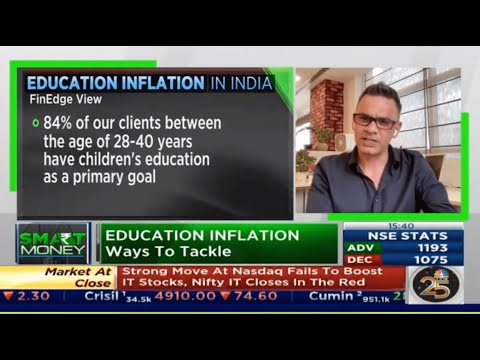
Why Retirement Planning is Important
Nov 08, 2023

Oct 31, 2023

.jpg "The Right Goal Calculation - Inflation and its effect")
Investing Behaviour and the investing roller coaster
Oct 12, 2023

Investing Stories
.jpg "Discover how FinEdge achieved ₹1500 Crores AUM with its client-first, goal-based investing model powered by the DiA platform.")
_(1)1.jpg "India is set to become the world’s 3rd largest economy by 2030, backed by digital leadership, strong institutions, and favourable demographics. FinEdge enables NRIs across 90+ countries to participate in this growth with goal-based, purpose-driven investi")
.jpg "Investing with purpose means aligning wealth to life goals with clarity, discipline, and long-term focus not chasing market noise.")
.jpg "Explore the biggest paradox in the investing industry: why most models put revenue before investor outcomes. Discover how FinEdge’s Bionic Model puts clients first.")
.jpg "Discover the 5 P’s that power FinEdge’s DiA platform—Purpose, People, Process, Personalisation & Product—built to turn dreams into action.")