Investing Insights

Top Tips for Successful Investment Portfolio Management
We have all heard the well-known phrase: “Don’t put all your eggs in one basket”. The phrase applies to many aspects of life, including investments. If you put all your money in a single asset class or security, and its value falls sharply or goes bust, you will incur significant losses or lose all your money. Hence, you need to build a diversified investment portfolio and manage it well. In this article, we will understand what is investment portfolio management, how to build and manage an investment portfolio.

Financial Planning for Single Women: Strategies for Long-Term Security
In today's world, not everyone prefers to get married and start a family. Some individuals, men as well as women, choose to stay single. They like to have a fulfilling career, focus on their passion like travel and go solo about it. In this article, we will understand how single women can do their financial planning and create long-term security for themselves.
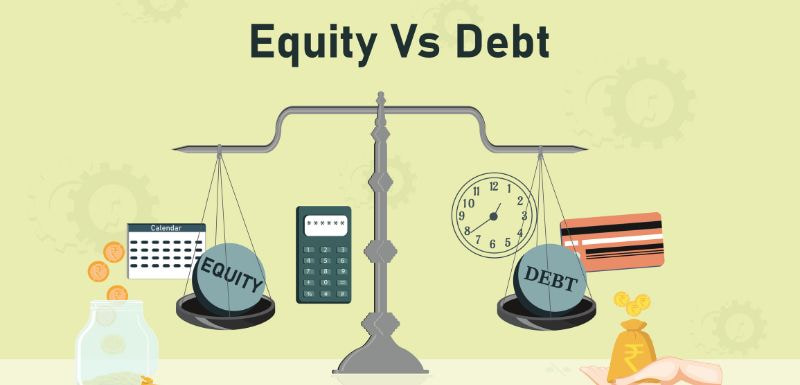
Understanding Debt and Equity Funds: Key Differences and Benefits
Investors can choose from different types of mutual funds depending on factors like investment time horizon, return expectation, lock-in period, taxation, risk involved, etc. You can look at equity funds for growth and debt funds for stability. In this article, we will understand what are equity funds and debt funds, the difference between equity and debt mutual funds, and things to consider before choosing these funds.
SIP Vs Lumpsum Investments: Which Is Better?
Investing towards financial goals can be done in two ways. The first option is to invest a part of the income every month for the long term. The other option is to invest a lumpsum amount once and stay invested for the long term. Both options have pros and cons, and investors often wonder which option they should choose. In this article, we will discuss SIP vs Lump sum, and which approach an investor should take.

Investing for Your Future: Financial Planning Tips for Women
Both men and women seek to improve their lives, achieve financial security, enhance their health, and realize their dreams. Despite this, investing is often perceived as a primarily male activity. Women frequently begin to learn about investing later in life, typically after major life events like marriage, and fewer women independently educate themselves about investing compared to men.

International Equity Funds
Understand whether investing in international equity funds is suitable for you.

What Is Financial Independence and How to Achieve It?
On 15th August, we celebrate Independence Day. We celebrate the spirit of freedom that gives us the right to live a life the way we want to. Have you thought about financial freedom in a similar way? When you achieve financial independence, it gives you more control over your time and further live a life the way you want to. In this article, we will discuss what financial independence is, its benefits, and how to achieve it.
ETFs Versus Index Funds: What Are the Differences, and Which One Should You Choose?
In the last few years, there has been a rise in passive investing due to factors like diversification, low costs, wide availability and choice of passive funds, ease of investing, etc. When it comes to passive investing, there are two ways of doing it. Exchange traded funds (ETFs) and index funds. In this article, we will understand what are ETFs and index funds, the differences, and which one you should choose.

Portfolio Rebalancing: What Is It and How to Do It
As of August 2024, the stock markets are trading near all-time high levels. In the last one year (as of 31st July 2024), the Nifty 50 Index has risen 26.31%. The Nifty Midcap 150 Index, with 54.60% returns, and the Nifty Smallcap 250 Index, with 58.06% returns, have done even better. During the same period, fixed income has been steady, with most debt instruments giving 7-9% returns. As a result, an investor's asset allocation would get skewed in favour of equities. Hence, the investor needs to do portfolio rebalancing. In this article, we will understand what portfolio rebalancing is, why, when, and how you should do it.

Why Should You Plan for Your Child’s Higher Education?
It is August 2024, and by now, you must have paid the annual school fees for your child for the academic year 2024-25. You must have noticed that the school may have increased the fees compared to last year to counter the impact of inflation. The same holds true for your child's higher education. The cost of education will increase with every passing year, and by the time it is time for your child to take admission to college, the education cost will have increased substantially.

Investment Strategies: Growth and Value Investing
The stock markets go through various business/economic cycles of ups and downs from time to time. During these phases, various stocks do well based on certain criteria. For example, growth/momentum stocks usually do well during bull markets, and value stocks do well during bear markets. The investment strategy that you follow influences your returns. In this article, we will understand the various investment strategies and which one you should follow to maximise your portfolio returns.

Importance of an Investment Expert in the Financial Planning Process
Have you ever seen any sportsperson without a coach? The sports person may be the best in their game and way ahead of others. Yet, they always train with a coach, who may also be their guide, mentor, etc. In the world of investments, an investment expert can play the same role as that of a coach in sports. An investment expert can be your advisor, coach, guide, mentor, etc. In this article, we will understand the importance of an investment expert in the financial planning process.
Latest Posts
Jun 16, 2026
Why Long-Term SIP Investing Works Better When It Is Linked to Real Goals
Jun 11, 2026
5 Investing Traps That Can Quietly Derail Long-Term Wealth Creation
Jun 09, 2026
How Much Should Your SIP Be to Build a ₹10 Crore Retirement Corpus?
Jun 08, 2026
Financial Planning Gaps Families Often Discover Too Late
Jun 05, 2026
The Importance of your Child’s Education Goal
Feb 28, 2024

Why Retirement Planning is Important
Nov 08, 2023

Oct 31, 2023

.jpg "The Right Goal Calculation - Inflation and its effect")
Investing Behaviour and the investing roller coaster
Oct 12, 2023

Investing Stories
.jpg "Discover how FinEdge achieved ₹1500 Crores AUM with its client-first, goal-based investing model powered by the DiA platform.")
_(1)1.jpg "India is set to become the world’s 3rd largest economy by 2030, backed by digital leadership, strong institutions, and favourable demographics. FinEdge enables NRIs across 90+ countries to participate in this growth with goal-based, purpose-driven investi")
.jpg "Investing with purpose means aligning wealth to life goals with clarity, discipline, and long-term focus not chasing market noise.")
.jpg "Explore the biggest paradox in the investing industry: why most models put revenue before investor outcomes. Discover how FinEdge’s Bionic Model puts clients first.")
.jpg "Discover the 5 P’s that power FinEdge’s DiA platform—Purpose, People, Process, Personalisation & Product—built to turn dreams into action.")